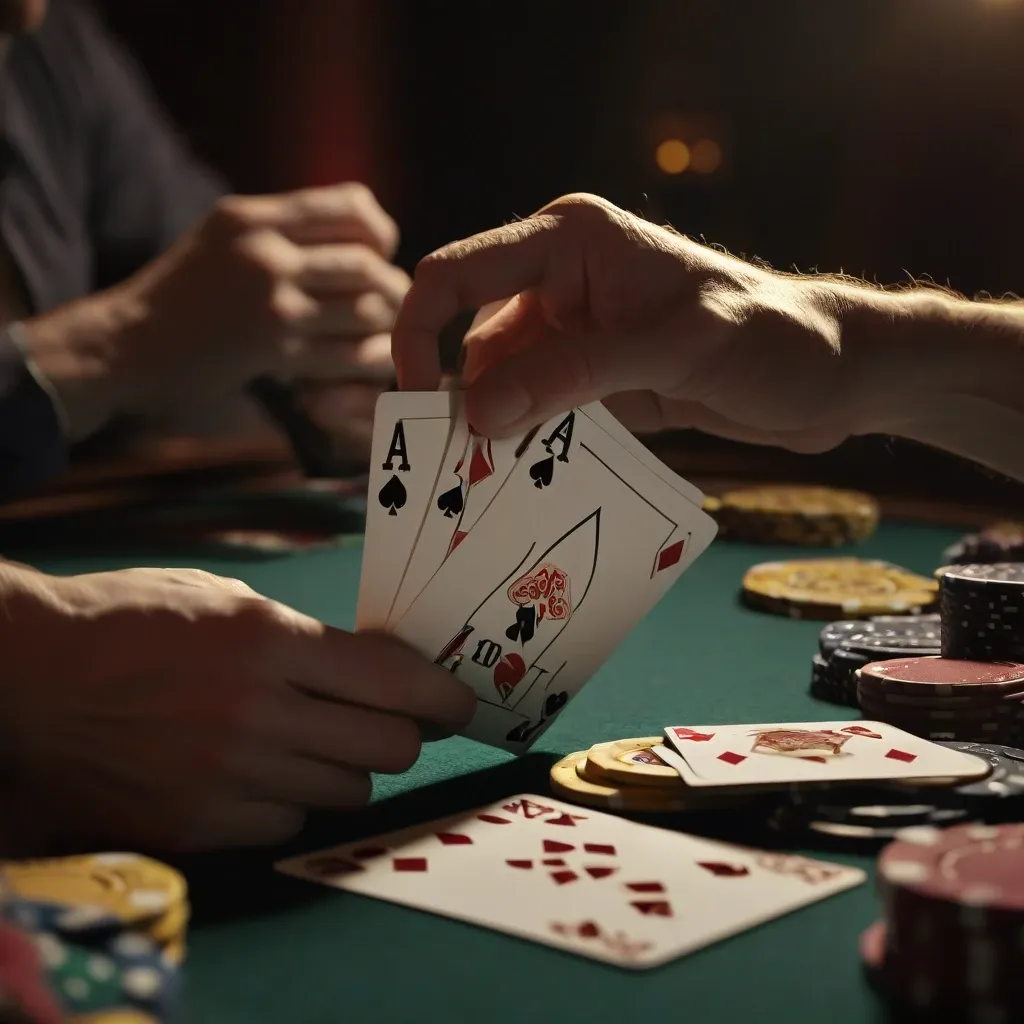
Ever been in a poker hand where you justknew* you were beat, even before the river card hit? Maybe you called anyway, hoping for a miracle, only to see your opponent confidently table the nuts. Chances are, position played a huge part in that feeling. It’s the silent assassin of poker, the unseen force that dictates action and allows savvy players to extract maximum value (or minimize losses). Think of it this way: in poker, knowledge is power, and position grants you superior knowledge.
Position in poker is arguably the most crucial – and often the most underestimated – element of a winning strategy. It’s not just about where you’re sitting at the table; it’s about the information that seating provides and how to wield that information like a finely tuned weapon. This article will dissect the intricacies of poker position, providing a clear framework for understanding and implementing advanced positional strategies. Get ready to transform your game and start exploiting the power of where you sit.
Decoding Poker Positions
Understanding the names and characteristics of each position is the first step to executing positional strategy in poker. Position in poker refers to where you are seated in relation to the dealer button, and it dramatically influences your decisions in a hand. Mastering positional awareness is fundamental to long-term success. In a standard 9-max game, poker positions are generally categorized into early, middle, and late, with the blinds presenting unique challenges. The earlier your position, the fewer players act after you, resulting in less information. Conversely, the later your position, the more information you possess, allowing for more informed decisions.
Early Position (EP): UTG and UTG+1
Early position (EP) encompasses the Under-the-Gun (UTG) and UTG+1 seats. Playing from EP presents challenges because you act before most other players, facing maximum uncertainty. A tight, conservative strategy is generally advisable. Starting hand selection must be extremely tight, primarily focusing on premium holdings like high pairs (AA, KK, QQ, JJ, TT), strong Aces (AK, AQ), and sometimes strong suited connectors (KQ, KJ, QJ). The primary goal is to avoid getting into tricky situations with marginal hands when facing aggression from later positions.
Middle Position (MP): Navigating the Midfield
Middle position (MP) offers more flexibility than early position. You have seen the action of a few players, gaining some information. Depending on the table dynamics, you can begin to open up your starting hand ranges slightly. If the players in early position are consistently tight, you can incorporate more speculative hands like suited connectors and slightly weaker Aces. However, caution is still warranted. If aggressive or unpredictable players remain behind you, maintaining a relatively balanced and selective approach is crucial.
Late Position (LP): Cutoff and Button – The Power Seats
Late position (LP), specifically the cutoff (CO) and the button (BTN), are the most advantageous positions at the poker table. Being last or second-to-last to act grants you an information edge that can be exploited for profit. You can widen your opening ranges significantly, incorporating a broader selection of suited hands, weaker Aces, and even some speculative holdings. The button is particularly powerful as you are guaranteed to act last post-flop if you were the pre-flop aggressor. This position allows for aggressive blind stealing and exploiting limpers with a high degree of success.
The Blinds: A Necessary Evil
The small blind (SB) and big blind (BB) are unique positions because you are forced to invest money into the pot before seeing your cards. These positions are inherently disadvantageous due to the required pre-flop investment and the fact that you will often be out of position post-flop. Defending your blinds against late-position raises is crucial, but over-defending can be costly. Choose your battles wisely, and don’t be afraid to fold marginal hands to avoid being exploited by aggressive players. Focus on minimizing losses and capitalizing on opportunities where you have a strong hand or a positional advantage on later streets.
The Information Edge: Why Acting Last Matters
In poker, acting last, also known as having position, grants an unparalleled information advantage. Observing opponents’ actions – checks, bets, or raises – before making a decision provides critical insights into their hand strength and intentions. This information transforms guesses into calculated decisions, significantly boosting your chances of success.
Pre-flop, watching players before you can reveal tendencies like loose raising or tight folding. On the flop, a check-check scenario might indicate weakness, while a bet could signify strength or a semi-bluff. The turn offers more refined information: a player who bet the flop and checks the turn might be trying to induce a bluff or has a marginal hand. Finally, on the river, the culmination of all previous actions provides the clearest picture of your opponents’ holdings, allowing for informed betting decisions.
This information is the cornerstone of informed betting, allowing you to dictate the pot size, control the pace of play, and maximize your expected value. Acting last allows a poker player overall strategic flexibility. You get to see what happened, and decide what to do.
Extracting Value: Betting for Maximum Profit
Acting last enables precise value extraction. By observing your opponent’s bet sizes and actions, you can deduce the likely strength of their hand. For example, if a player bets small on the river after checking the turn, they might have a weak made hand they are unwilling to fold. Recognizing this, you can then size your bet to extract the maximum amount of value they are willing to pay, increasing your overall profits.
Identifying Bluffing Opportunities: Taking Down the Pot
Having position facilitates identifying profitable bluffing opportunities. If players before you have shown weakness by checking down multiple streets, the pot might be ripe for the taking, especially if the board texture is unfavorable for them. By seeing their passivity, you can confidently represent a strong hand and force them to fold, adding those pots to your winnings. This applies to the earlier streets as well.
Hand Strength: Playing Strong
Acting last allows you to control the narrative when holding a strong hand. While you want to extract maximum value, over-betting can scare opponents away. Instead, a well-disguised strong hand played from last position can entice weaker hands to call. By carefully considering how other players have acted, and then acting casually, you can extract maximum value while simultaneously convincing them that your hand is not as strong as it actually is, which of course, is the ultimate win in poker.
Pre-Flop Strategy: Position-Based Hand Selection
A solid pre-flop strategy forms the bedrock of successful poker play. Mastering position-based hand selection is a crucial element. The core idea is simple: tailor your starting hand ranges to your position at the table. Playing tighter in early positions (UTG, UTG+1, MP) and looser in late positions (Cutoff, Button) and the blinds is generally advisable. Early positions demand stronger hands because you’ll be acting before more players, increasing the likelihood of facing stronger hands later in the hand. Late positions, offer the advantage of observing more players’ actions, allowing you to profitably play a wider range of hands.
Constructing pre-flop ranges involves considering factors beyond just position. A tight, passive table allows you to open slightly wider, while an aggressive table might require tightening up your ranges. Examples of hands suitable for early positions are high pairs (AA-TT), broadway cards (AK, AQ, AJ, KQ), and strong suited connectors (suited aces such as AJs, AQs). Late positions allow for a wider opening range, possibly including suited gaps (78s, 89s), weaker aces (A2s-A9s), and suited connectors (56s, 67s). Your ‘opening range’ is the set of hands you’re comfortable raising with when you’re the first player to enter the pot.
Adjusting for Table Dynamics
Poker is a dynamic game, and adherence to static pre-flop charts can be a pitfall. Flexibility is key to maximizing profits. If the table is playing extremely passively, with few raises and many limpers, you can profitably loosen your opening ranges and isolate weak players, allowing you to win small pots with aggression. Conversely, against aggressive opponents who frequently 3-bet, tightening your pre-flop ranges and 4-bet bluffing them with a good hand is more useful. For example, if you are dealt suited connectors in middle position and typically fold to a raise; versus a very aggressive player, this could be a spot to call a raise and see a flop to see how they adjust to texture.
Opponent Tendencies
Exploiting opponent tendencies is another critical aspect of pre-flop play. Identifying players with overly weak opening ranges grants opportunities for profitable aggression. If a player consistently opens with a very wide range from late position, you can profitably 3-bet them more frequently with a wider range yourself. Conversely, against players who only open with very strong hands, you need to tighten your calling and 3-betting ranges accordingly. For instance, if you observe an opponent consistently folding to 3-bets, you can leverage this by 3-betting light, even with marginal hands, to steal chips and pressure their play. Also identifying if anyone is calling with any two cards can manipulate the pot more, or even tighter. Which is also possible to manipulate.
Post-Flop Domination: Leveraging Position
Post-flop poker is where fortunes are truly made or lost, and a crucial element for success is understanding and exploiting positional advantage. Controlling the pot, making well-informed decisions, and bluffing effectively become significantly easier when you act last, or closer to last, on each street. This positional power allows you to observe your opponents’ actions first, giving you valuable information to formulate your strategy.
On the flop, being in position allows you to see how your opponent reacts to the initial board texture. If they check, you have the option to continuation bet (c-bet), take a free card by checking behind, or even bet for value if you connect strongly. If they bet, you can call, raise for value or as a bluff, or fold based on your hand and their perceived strength. The turn offers similar advantages. You can gauge their reaction to the turn card and adjust your strategy accordingly. The river is where positional advantage is most potent. Acting last allows you to extract maximum value from strong hands, make well-timed bluffs, and avoid costly mistakes by observing your opponent’s betting patterns.
A powerful tool in your arsenal when in position is the check-raise. By allowing an opponent to bet first after you check, you can then raise, representing immense strength and potentially forcing them to fold better hands. This move is particularly effective on boards that hit your perceived range harder than your opponent’s.
Sizing Considerations
Sizing bets in position is about more than just having a strong hand; it’s about crafting a narratively valid play. When value betting, you want to extract the maximum possible from your opponent, and you may want to begin with a smaller bet and increase it with successive draws, but you may also go for a larger first bet if it has been a passive table. Conversely, when bluffing, you need to size your bets to make the risk/reward ratio unfavorable for your opponent to call. Remember, the size of your bets should be related to the size of the pot to make sense to other players. Make sure that you have had a good look at the others at the table so you know who to bluff and how high the bet can be.
Delayed C-Betting
Delayed c-betting is a potent technique where you check on the flop, despite being the pre-flop aggressor, and then bet on the turn. The delayed c-bet can look very strong and can net you a big pot if the other player(s) get the wrong impression. Remember, delayed c-bets are not only useful to get pots, they are even more useful to throw other players off of your trail. If done correctly, you will find a big increase in your earnings. However, this strategy requires careful reading of board textures and opponent tendencies.

Out of Position? No Problem: Counter-Strategies
Playing out of position (OOP) in poker presents inherent disadvantages, ceding initiative and information to your opponent. However, a well-structured OOP strategy can mitigate these challenges. Key tactics involve tightening your range, employing check-raises strategically, and adopting robust defensive measures. The goal is to transform a positional weakness into an exploitable opportunity for your opponents, compelling them to make errors. By understanding how to counteract the common pitfalls of being OOP, players can maintain profitability even when not holding the positional advantage.
Tighter Range Selection
When playing out of position, a tighter range selection is paramount. Playing fewer hands allows for stronger holdings, reducing the complexity of post-flop decisions. Avoid marginal hands that are prone to domination. Focus on premium hands and those with strong implied odds. This approach simplifies decision-making. It provides a higher likelihood of hitting favorable flops. It also makes opponent exploitation difficult. A well-constructed opening range should form the bedrock of any OOP strategy, enabling players to navigate tricky spots with greater confidence.
Check-Raising in the Right Situations
Check-raising can be a powerful tool when playing out of position. It converts passivity into aggression. Pick spots where your opponent is likely to bet with a wide range. This allows you to take control of the pot and extract maximum value from stronger holdings. A well-timed check-raise can disrupt your opponent’s plans. It also puts pressure on their weaker hands. Careful hand selection is crucial; aim for situations where you have a reasonable chance of holding the best hand or having significant drawing potential. This play is not suitable in all playing situations. Use judgment when applying this aggressive move.
Advanced Concepts: Exploiting Opponents’ Positional Tendencies
To truly excel at poker, it’s crucial to move beyond basic strategy and delve into the realm of exploitative play. This involves carefully observing and profiling your opponents, identifying their tendencies, and then tailoring your gameplay to capitalize on those weaknesses. A common mistake many players make is positional errors; for instance, an opponent in late position might be overly aggressive, raising too frequently in an attempt to steal blinds. Conversely, a player in early position might be overly passive, folding too readily to avoid risking chips with marginal hands.
Recognizing these patterns is the first step. Once you’ve identified a tendency, you can adjust your strategy accordingly. If an opponent is consistently aggressive in late position, you might tighten your own raising range and be prepared to re-raise them with stronger hands. Or, if someone is overly cautious in early position, you can widen your stealing range, knowing they’re less likely to put up a fight. Remember every player has their own style. Knowing it is the battle.
Defensive Postions When Needed
Even the most skilled poker players know when to fold. Sometimes, the smartest play is a defensive one. Getting out of a betting round – or even a whole game – might be the best way to conserve chips and live to fight another day. This is true even if you think you have a good hand. There are times a good-looking hand is simply a trap.
Leveling Your Gameplay
Advanced poker goes well beyond knowing the rules and hand rankings. A key aspect is “leveling,” which means thinking about what your opponent thinks you have, and then adjusting your play based on that assessment. Are they assuming you’re weak because you checked the flop? Or do they believe you have a monster hand because you’ve been betting aggressively? Each player’s move is a reflection of past experiences and habits. If you can anticipate their thought process – if you can successfully level them – you gain a significant edge.
Conclusion
In summary, mastering positional play is not just about understanding the basics; it’s about consistently applying them and adapting to the ever-changing dynamics of the game. Poker mastery is a journey, not a destination. The most successful players are those who never stop learning and refining their strategies.
Positional awareness, hand selection, and the ability to read opponents are all critical components of a winning poker strategy. By continuously practicing these skills and adjusting your approach based on the table conditions and your opponents’ tendencies, you’ll significantly increase your chances of achieving long-term success. So, take what you’ve learned, apply it to your game, and witness the improvement firsthand. The felt awaits, and fortune favors the prepared.