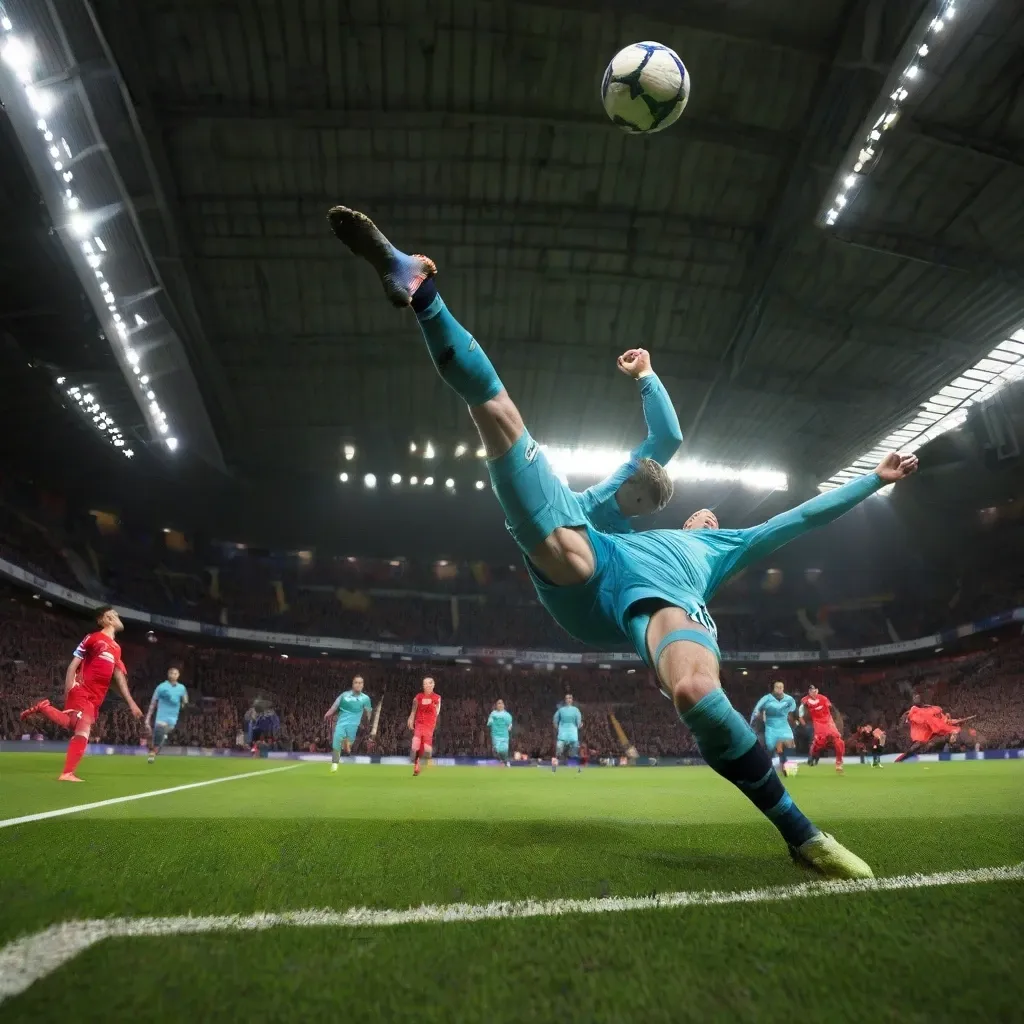
Remember that heart-stopping moment when a perfectly placed corner kick led to an unexpected, game-changing goal? Corner kicks are no longer just routine plays in the Premier League; they have evolved into critical strategic weapons. In today’s tactical evolution of football, mastering set-pieces, especially corner kicks, can be the difference between victory and defeat. Welcome to an in-depth exploration of the fascinating world of corner kicks. We’ll dissect the art of the inswinging corner, uncover the secrets employed by set-piece analysts, and reveal how teams exploit defensive vulnerabilities to maximize their scoring potential.
With years immersed in the beautiful game, from analyzing team strategies to studying player movements, I’ve gained a deep understanding of what makes a corner kick truly effective. The upcoming sections will offer unique insights into maximizing the potential of every corner kick, turning these set-pieces into genuine goal-scoring opportunities. Join me in exploring the strategic depth that corner kicks bring to the Premier League and beyond.
The Rise of the Corner Kick as a Premier League Weapon
The humble corner kick, once a routine part of the game, has undergone a transformation, ascending to become a potent weapon in the Premier League’s attacking arsenal. Forget the days when a corner was merely a chance to sling the ball into the box and hope for the best. We’re now witnessing meticulously planned routines, data-driven player positioning, and specialized coaching geared towards maximizing set-piece opportunities.
The numbers don’t lie. Over the past decade, the percentage of Premier League goals originating from corner kicks has demonstrably increased. While the exact figures fluctuate season to season, the upward trend is undeniable. This isn’t just a statistical anomaly; it reflects a fundamental shift in how teams approach attacking football. Teams are investing significantly more resources in set-piece training, recognizing the high reward potential.
Several factors contribute to this corner kick renaissance. Advancements in sports analytics have provided coaching staffs with unprecedented insights into optimal delivery angles, player movement, and defensive vulnerabilities. Teams can now analyze thousands of corners, identifying patterns and exploiting weaknesses with laser-like precision. Furthermore, the tactical evolution of the game has led to more congested midfields, making it harder to score from open play. Consequently, set-pieces, especially corners, offer a valuable alternative route to goal.
Certain Premier League teams have emerged as corner kick specialists, consistently outperforming the league average in set-piece conversion rates. Their success serves as a blueprint for others, further fueling the emphasis on corner kick proficiency. It’s no longer enough to simply have tall players; it’s about strategic planning, coordinated movement, and the ability to consistently deliver quality balls into dangerous areas. The corner kick is not what it used to be; it’s a calculated, increasingly crucial component of Premier League success.
Decoding the Inswinger: The King of Corners
Technique and Execution
The inswinging corner – a beautiful, bending delivery that can turn a game on its head. But what makes it so effective? It’s all in the technique. The key lies in the angle of approach to the ball and the point of contact. A slightly angled run-up allows you to wrap your foot around the ball, imparting that crucial inward spin. Think of striking the ball with the inside of your foot, aiming for a spot slightly off-center. This generates the curve that makes defenders tremble.
The beauty of the inswinger is that it doesn’t demand pinpoint accuracy in terms of distance. The bend itself does much of the work, pulling the ball towards the goal and creating uncertainty. The chaos around the six-yard box increases exponentially, forcing goalkeepers into incredibly difficult decisions. Do they come out and risk being caught in no-man’s land, or stay put and hope their defenders can deal with the incoming danger? Most times, they cannot.

Set-Piece Specialists: The Brains Behind the Chaos
The beautiful game, with its swirling narratives and unpredictable moments, often hinges on the meticulously planned chaos of set-pieces. Corner kicks, free kicks – these aren’t just random flurries of activity near the goal. They are increasingly becoming the domain of a new breed of football tactician: the set-piece analyst.
These analysts are the unsung heroes transforming hopeful punts into calculated opportunities. Their arsenal consists of video analysis software, reams of data metrics, and a keen eye for pattern recognition. They dissect countless hours of game footage, not just of their own team, but also of upcoming opponents. The aim? To unearth vulnerabilities in defensive setups and identify areas where specifically designed routines can flourish.
The contribution of set-piece analysts extends beyond simply identifying weaknesses. They are instrumental in crafting unique plays, tailored to the specific skillsets of the players available. By understanding player positioning, movement patterns, and even individual quirks, they can devise strategies that maximize the chances of success. This may involve intricate passing sequences, deceptive decoy runs, or cleverly disguised screens, all designed to unlock a moment of opportunity amidst the packed penalty area.
The impact of these analytical insights is tangible. Teams that embrace the expertise of set-piece analysts often experience a marked improvement in their success rate. Goals from set-pieces can be the difference between victory and defeat. This makes the role of the set-piece analyst increasingly vital in the high-stakes world of professional football, where every marginal gain can have a significant impact on the final score.
Exploiting Defensive Weaknesses: A Tactical Masterclass
Common Defensive Setups
When the ball is cornered, defensive organization determines the outcome as much as offensive strategy. Teams commonly use zonal marking, where players defend a specific area, or man-marking, where each player is assigned to an opposing player. Zonal marking can be susceptible to overloads and late runs into the box, while man-marking can be disrupted by screens and decoy movements. A hybrid approach, combining elements of both, seeks to mitigate the weaknesses of each system but requires high coordination.

Adapting Your Approach: A Continuous Evolution
The realm of corner kicks isn’t static; it’s a dynamic arena where strategies are perpetually tested, refined, and sometimes, entirely reinvented. What works wonders today might be easily neutralized tomorrow. Therefore, consistent learning, adaptation, and innovation are not just beneficial, they’re absolutely vital for sustained success.
Consider the evolution of zonal marking. Initially, clever routines and well-placed deliveries could consistently exploit the gaps. However, as defenses became more adept at zonal coverage, attackers had to adapt. We saw the rise of decoy runners, players drawing defenders away from key areas, creating momentary lapses in the defensive line. Then came the short corner, designed to drag defenders out of position and create more chaos near the box.
This tactical evolution highlights a critical point: strategic flexibility. A team wedded to a single approach will quickly find itself predictable and ineffective. Coaches and players must embrace a mindset of continuous improvement, constantly analyzing their own performance, studying opponents, and experimenting with new ideas. This might involve tweaking player positioning, varying delivery styles (low whips, high crosses, driven balls), or even incorporating unexpected elements like indirect free kicks disguised as corners.
Strategic flexibility involves adapting to different game situations. For instance, late in a close game, a more direct, risk-taking approach might be warranted. Conversely, when protecting a lead, a more conservative strategy focused on maintaining possession and avoiding mistakes could take precedence. One time, we were down a goal in the final minutes. Our usual intricate corner routine was too slow. Instead, we opted for a simple, powerful delivery to the far post, resulting in a flick-on and a game-tying goal. It wasn’t pretty, but it worked because we adapted to the immediate demands of the situation.
The key takeaway is that mastering corner kicks is an ongoing journey, not a destination. Embrace the challenge of continuous learning, be willing to experiment, and never stop seeking new ways to gain an edge. The most successful teams treat every corner kick as an opportunity for continuous improvement and innovative tactics, constantly pushing the boundaries of what’s possible. This commitment to evolution is what separates the good from the truly great.
Drills and Exercises: Mastering the Craft
Mastering the art of corner kicks and set pieces in soccer demands dedication and strategic training. It’s not just about aimlessly booting the ball into the box; it’s about precision, timing, and understanding spatial dynamics. Incorporating specific drills and exercises into your training regimen can dramatically enhance your performance in these crucial game situations.
Corner Kick Drills: These drills focus on refining your kicking technique, trajectory, and power. Start with basic repetition drills, aiming for consistent placement of the ball into designated zones within the penalty area. Progress to incorporating different types of deliveries – inswinging, outswinging, driven, and floated – to challenge the defense. Tactical workouts are very important, so try simulating game-like scenarios with players positioned in the box. This helps you develop the ability to identify targets and deliver the ball accordingly.
Set Piece Exercises: These exercises involve the coordinated movement of players on both the attacking and defending sides. Practice various set-piece routines, focusing on timing, positioning, and communication. This should be included like a football exercises for your team. Experiment with different formations and player roles to create unpredictable attacking threats. Defensively, work on zonal marking, man-marking, and clearing techniques to effectively neutralize the opponent’s set-piece plays.
Consistently practicing those tactical corner kick drills and tactical workouts will lead not only to improvement of executing corner kicks with better accuracy, but also will improve the overall football excercises skills, improving in each training session.
Conclusion
In summary, mastering the art of the corner kick offers a significant edge in football. Teams that invest in set-piece analysis, favor inswinging corners, and maintain tactical flexibility can unlock hidden scoring opportunities often overlooked. The benefits are clear: increased goal conversion, improved game success, and a distinct tactical advantage. In leagues like the Premiere League, where margins are slim, a well-executed corner can be the difference between victory and defeat.
Continuous improvement and adaptation are paramount. By embracing these strategies and integrating them into your game, you’re not just improving your corner kicks; you’re elevating your entire team’s potential. It’s time to take action, refine your approach, and unlock the hidden goals waiting to be scored.